Rechercher dans ce blog

Thursday, May 6, 2021

You're Fully Vaccinated! But Do You Need A Booster Shot? - NPR


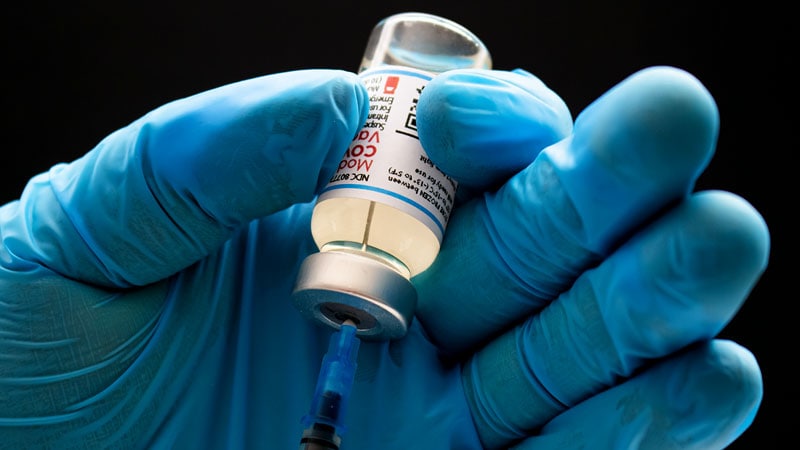
While many people are still waiting to be fully vaccinated, medical experts are now thinking about booster shots. Alex Zea/Europa Press/Europa Press via Getty Images hide caption

toggle caption
Alex Zea/Europa Press/Europa Press via Getty Images

While many people are still waiting to be fully vaccinated, medical experts are now thinking about booster shots.

Alex Zea/Europa Press/Europa Press via Getty Images

It's been six months since the first COVID-19 vaccine was administered in the U.S. and now almost 40% of the country's population is fully vaccinated.

After more than a year of lockdown measures and quarantines, people are ready to get back to some sense of normal. With their vaccination cards in hand, they're ready to start traveling, go on vacations and see friends and family.

But how long that normalcy will be sustained depends on how long the vaccines offer protection from the coronavirus, and if people will need to receive booster shots in the future.

NPR's All Things Considered wants to know what questions you have about getting a booster shot.

Share your questions with using the form below and an NPR producer may be in touch for an upcoming story we're working on.

Your submission will be governed by our general Terms of Use and Privacy Policy. As the Privacy Policy says, we want you to be aware that there may be circumstances in which the exemptions provided under law for journalistic activities or freedom of expression may override privacy rights you might otherwise have.

The Link Lonk


May 07, 2021 at 05:41AM
https://ift.tt/3eWZaRb

You're Fully Vaccinated! But Do You Need A Booster Shot? - NPR

https://ift.tt/2DVP6sH

Moderna COVID-19 Vaccine Booster Works Against Two Variants - Medscape


Find the latest COVID-19 news and guidance in Medscape's  Coronavirus Resource Center.

The Moderna SARS-CoV-2 vaccine booster developed specifically with variant B.1.351 in mind shows efficacy against that strain and the P1 variant among people already vaccinated for COVID-19, according to first results released on Wednesday.

Furthermore, data from the company's ongoing phase 2 study shows the variant-specific booster, known as mRNA-1273.351, achieved higher antibody titers against the B.1.351 variant than a booster with the original Moderna vaccine.

"We are encouraged by these new data, which reinforce our confidence that our booster strategy should be protective against these newly detected variants. The strong and rapid boost in titers to levels above primary vaccination also clearly demonstrates the ability of mRNA-1273 to induce immune memory,” Stéphane Bancel, chief executive officer of Moderna, said in a statement.

The phase 2 study researchers also are evaluating a multivariant booster that is a 50/50 mix of mRNA-1273.351 and mRNA-1273, the initial vaccine given FDA emergency use authorization, in a single vial.

Unlike the two-dose regimen with the original vaccine, the boosters are administered as a single dose immunization.

The trial participants received a booster 6 to 8 months after primary vaccination. Titers to the wild-type SARS-CoV-2 virus remained high and detectable in 37 out of 40 participants. However, prior to the booster, titers against the two variants of concern, B.1.351 and P.1, were lower, with about half of participants showing undetectable levels.

In contrast, 2 weeks after receiving a booster with the original vaccine or the B.1.351 strain-specific product, pseudovirus neutralizing titers were boosted in all participants and all variants tested.

"Following [the] boost, geometric mean titers against the wild-type, B.1.351, and P.1 variants increased to levels similar to or higher than the previously reported peak titers against the ancestral (D614G) strain following primary vaccination," the company stated.

Both mRNA-1273.351 and mRNA-1273 booster doses were generally well tolerated, the company reported. Safety and tolerability were generally comparable to those reported after the second dose of the original vaccine. Most adverse events were mild to moderate, with injection site pain most common in both groups. Participants also reported fatigue, headache, myalgia and arthralgia.

The company plans to release data shortly on the booster efficacy at additional timepoints beyond two weeks for mRNA-1273.351, a lower dose booster with mRNA-1272/351, as well as data on their multivariant mRNA vaccine booster.

In addition to the company's phase 2 study, the National Institute of Allergy and Infectious Diseases is conducting a separate phase 1 study of mRNA-1273.351.

Damian McNamara is a staff journalist based in Miami. He covers a wide range of medical specialties, including infectious diseases, gastroenterology and neurology. Follow Damian on Twitter:  @MedReporter.

For more news, follow Medscape on Facebook, Twitter, Instagram, YouTube, and LinkedIn

The Link Lonk


May 06, 2021 at 10:16PM
https://ift.tt/3vZw3Un

Moderna COVID-19 Vaccine Booster Works Against Two Variants - Medscape

https://ift.tt/2DVP6sH

Pentagon tracks Chinese rocket booster as it falls back toward Earth - Anchorage Daily News


The U.S. Space Command is tracking a large Chinese rocket booster that is tumbling uncontrollably through space and is expected to come crashing down to Earth sometime this weekend.

It’s not clear where the 22-metric-ton rocket stage would land or what, if anything, the Pentagon would do if it were to come down over a populated area, Pentagon spokesman John Kirby told reporters this week.

“I don’t want to hypothesize or speculate about possible actions the department might or might not take here,” he said. “We’re tracking it. We’re following it as closely as we can. It’s just a little too soon right now to know where it’s going to go or what if anything can be done about that.”

While the booster would be among the 10 largest objects ever to reenter Earth’s atmosphere on an uncontrolled trajectory, the risk for those on the ground is very low — astronomically low, scientists say. There’s a roughly 70 percent chance debris will fall mainly into the ocean, and even if not, the odds of it affecting a populated area are minuscule. There are no recorded instances of a human ever being killed by reentering space debris — though a cow in Cuba did lose its life in 1961.

When an object falls out of orbit, the amount of debris that makes it to the ground depends on the object’s size, shape, mass and the melting temperatures of all materials used. Even the biggest satellites produce a comparatively tiny amount of debris.

Some scientists estimate that 9 metric tons of the Long March 5B rocket may survive re-entry. The rocket was launched late last month, hoisting the first module of a space station China is assembling in orbit as part of the nation’s ambitious plans in space.

Unlike most rocket boosters, which deliver their payloads to orbit and then fall back to Earth in a predetermined area, the Long March 5B rocket, powered by four side boosters, reached orbit and is expected to stay aloft a few days before it re-enters the Earth’s atmosphere.

Scientists won’t know where it will land until a few hours before the debris strikes. Most objects re-enter Earth’s outer atmosphere at about 18,000 mph. That means even a few minutes’ discrepancy could mean debris falling on the opposite side of a continent.

Part of the mystery surrounding where the debris enters is due to uncertainties about air density in Earth’s “mesosphere,” the atmospheric layer 30 to 50 miles high, which can result in varying amounts of air drag.

“We have detailed models of the upper atmosphere, but they’re models that depend on things like today’s solar activity,” explained Jonathan McDowell, an astrophysicist at the Harvard-Smithsonian Center. “Weather forecasting is hard, even in space. The (sun’s) x-ray flux will change the headwind. There are (daily cycles) and (effects at different longitudes) and all other kinds of terms that go into atmospheric density.”

Right now, there’s a 42-hour window, centered on Saturday night, during which the debris may crash down.

The Pentagon tracks thousands of pieces of debris in space, and often warns satellite operators about potential collisions. From time to time, the International Space Station must maneuver to avoid pieces of space junk, which are traveling at 17,500 mph and have the potential to cause enormous damage.

It’s not the first time China has contributed to the growing problem of space debris. In 2007, it shot down a dead satellite with a missile that, according to a statement from the Secure World Foundation, a think tank, “created a cloud of more than 3,000 pieces of space debris, the largest ever tracked.” Much of that debris “will remain in orbit for decades, posing a significant collision threat to other space objects in Low Earth Orbit.”

Last year, during the first flight of the Long March 5B rocket, the booster passed over populated portions of Earth before pieces of debris landed in Africa. The NASA administrator at the time, Jim Bridenstine, criticized the Chinese space agency, according to SpaceNews, saying the event “could have been extremely dangerous. We’re really fortunate in the sense that it doesn’t appear to have hurt anybody.”

Having yet another rocket stage reenter is problematic and poses a challenge for diplomats. “It is very much against the standard practice of the last few years,” said Ted Muelhaupt, the principal director of Aerospace Corporation’s Center for Orbital and Reentry Debris Studies. “We’ve learned our lessons. And when something as big as this is coming down, the expected norms are to bring it down someplace where we know people aren’t, such as the South Pacific.”

Tensions between China and the United States in this arena are growing. After China landed a robotic spacecraft on the far side of the moon, former vice president Mike Pence said it was an attempt to “seize the lunar strategic high ground and become the world’s pre-eminent spacefaring nation.”

The Biden administration this week took a more measured approach. In reaction to the rocket stage falling, White House press secretary Jen Psaki said that the U.S. “is committed to addressing the risks of growing congestion due to space debris and growing activity in space.”

She said the administration wants “to work with the international community to promote leadership and responsible space behaviors. It’s in the shared interests of all nations to act responsibly in space to ensure the safety, stability, security, and long-term sustainability of outer space activities.”

The Link Lonk


May 07, 2021 at 03:46AM
https://ift.tt/33kBCjB

Pentagon tracks Chinese rocket booster as it falls back toward Earth - Anchorage Daily News

https://ift.tt/2DVP6sH

Moderna says trial booster vaccine effective against COVID-19 variants - MarketWatch


Moderna Inc. MRNA, -1.44% stock rose more than 1% in the extended session Wednesday after the biotechnology company said that a single-dose booster COVID-19 vaccine worked against the novel coronavirus' variants, according to initial data from a Phase 2 study. The booster was effective against the variant first identified in South Africa and the variant first identified in Brazil, Moderna said. The company is submitting the preliminary results to peer-reviewed publication. "As we seek to defeat the ongoing pandemic, we remain committed to being proactive as the virus evolves. We are encouraged by these new data, which reinforce our confidence that our booster strategy should be protective against these newly detected variants," Chief Executive Stéphane Bancel said in a statement. Moderna stock ended the regular trading day down 6%.

The Link Lonk


May 06, 2021 at 03:17AM
https://ift.tt/3eUXo34

Moderna says trial booster vaccine effective against COVID-19 variants - MarketWatch

https://ift.tt/2DVP6sH

The Pentagon is tracking a Chinese rocket booster as it falls back to Earth - The Washington Post


Last year, during the first flight of the Long March 5B rocket, the booster passed over populated portions of Earth before pieces of debris landed in Africa. The NASA administrator at the time, Jim Bridenstine, criticized the Chinese space agency, according to SpaceNews, saying the event “could have been extremely dangerous. We’re really fortunate in the sense that it doesn’t appear to have hurt anybody.”

The Link Lonk


May 07, 2021 at 12:35AM
https://ift.tt/2PToUoY

The Pentagon is tracking a Chinese rocket booster as it falls back to Earth - The Washington Post

https://ift.tt/2DVP6sH

Boosters, Mismatched Doses: Vaccine Innovations May Up Protections - Kaiser Health News


The Link Lonk


May 06, 2021 at 08:16PM
https://ift.tt/3tppnNA

Boosters, Mismatched Doses: Vaccine Innovations May Up Protections - Kaiser Health News

https://ift.tt/2DVP6sH

Moderna Booster Shot Bolsters Antibodies Against Variant Strains - Bloomberg


[unable to retrieve full-text content]
  1. Moderna Booster Shot Bolsters Antibodies Against Variant Strains  Bloomberg
  2. Moderna Booster Effective Against Some Variants, Study Suggests  The New York Times
  3. Moderna Vaccine Booster Shot Appears to Works, Data Show. What to Know.  Barron's
  4. Moderna says its Covid vaccine booster works well against variants  NBC News
  5. Moderna says trial booster vaccine effective against COVID-19 variants  MarketWatch
  6. View Full Coverage on Google News
The Link Lonk


May 06, 2021 at 03:05AM
https://ift.tt/3tsAXr4

Moderna Booster Shot Bolsters Antibodies Against Variant Strains - Bloomberg

https://ift.tt/2DVP6sH

Featured Post

Booster may be needed for J&J shot as Delta variant spreads; some experts already taking them - ABC27

Coronavirus by: Reuters , via Nexstar Media Wire Posted: Jun 29, 2021 / 02:02 PM EDT / Updated: Jun 29, 2021 / 02:02 PM EDT THORN...

Popular Posts