Rechercher dans ce blog

Saturday, May 8, 2021

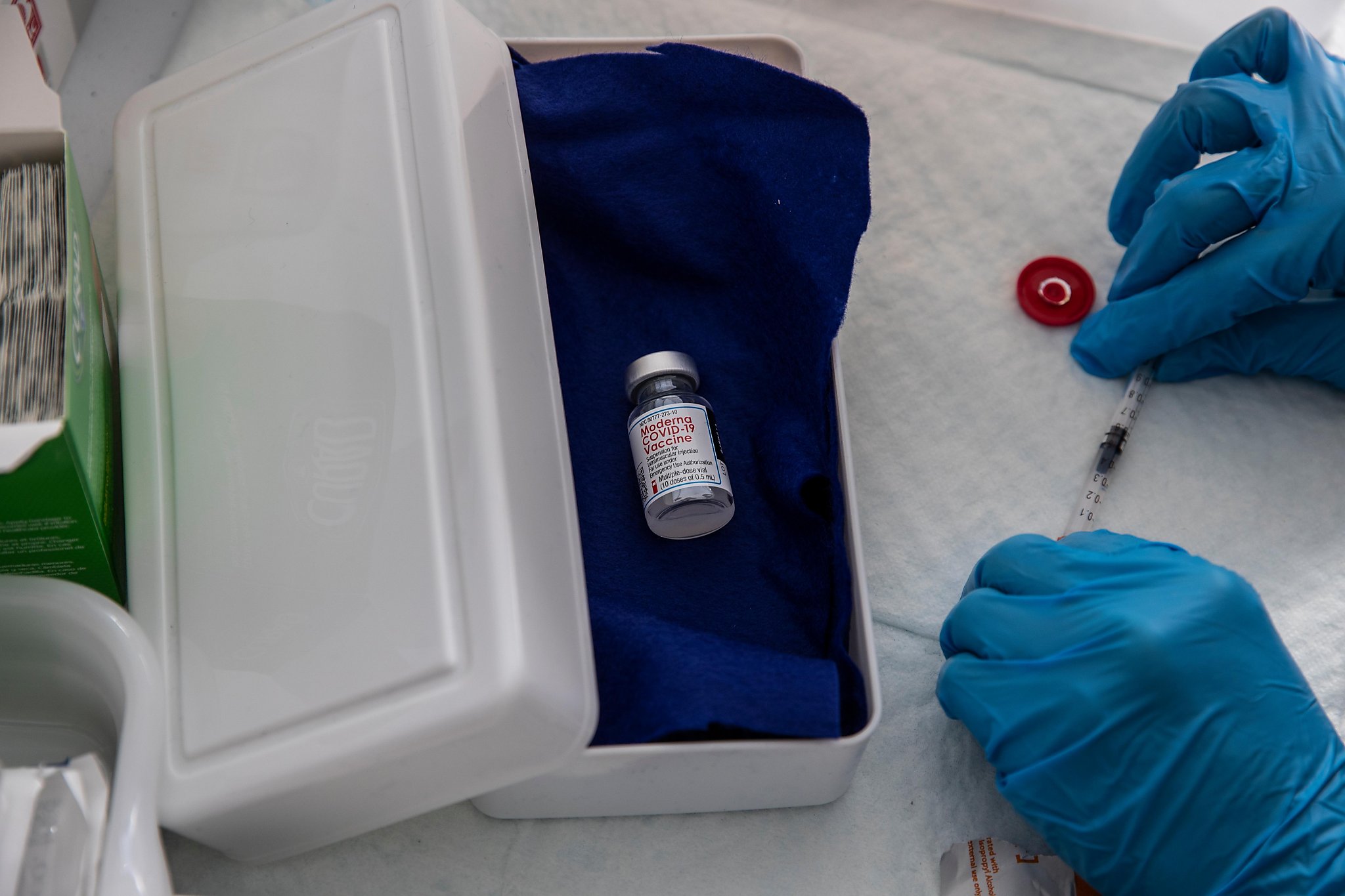
Moderna Releases Positive Initial COVID-19 Vaccine Booster Data Against Variants of Concern - Pharmacy Times


“We are encouraged by these new data, which reinforce our confidence that our booster strategy should be protective against these newly detected variants. The strong and rapid boost in titers to levels above primary vaccination also clearly demonstrates the ability of mRNA-1273 to induce immune memory,” said Stéphane Bancel, chief executive officer of Moderna, in a press release.

Bancel noted that the mRNA platform specifically allows for these types of quick design changes to vaccine candidates that allow for incorporating targets against key virus mutations as necessary. He explained that this ability to rapidly adapt to changes in the virus may allow for faster development of future alternative variant-matched vaccines as well.

“We look forward to sharing data on our multivalent booster candidate, mRNA-1273.211, which combines mRNA-1273 and mRNA-1273.351 in a single vaccine, when available,” Bancel said in the press release. “We will continue to make as many updates to our COVID-19 vaccine as necessary to control the pandemic.”

During the study, the investigators tested 3 different vaccine strategies for boosting neutralizing titers in previously vaccinated participants. The first strategy was using the booster candidate mRNA-1273.351, which was developed to target the B.1.351 variant first identified in the Republic of South Africa.

The second method was using the multivalent booster candidate mRNA-1273.211, which is a 50-50 mix of mRNA-1273 and mRNA-1273.351, in a single vaccine. The third strategy tested was using a single 50 µg booster dose of mRNA-1273.

Based on preliminary data 2 weeks following the administration of a booster dose of mRNA-1273 or mRNA-1273.351, the investigators were able to compile data for their initial analysis. Furthermore, additional samples are ongoing and planned for collection later during the trial for the multivalent vaccine candidate, mRNA-1273.211, and for a lower dose of mRNA-1273.351. In the study, trial participants were tested for pseudovirus neutralization (PsVN) titers before the boosters were administered and approximately 6 to 8 months after their primary vaccination series.

Upon analysis, the investigators found that PsVN titers were quite high compared with the wild-type SARS-CoV-2 virus, with 37 of 40 participants having detectable titers. However, titers against the variants of concern, such as B.1.351 and P.1, were significantly lower, with approximately half of participants presenting with titers below the assay limit of quantification before they were given the booster.

Two weeks following a booster shot of either mRNA-1273 or mRNA-1273.351, investigators boosted PsVN titers in all participants and tested for all potential variants. The investigators then tested for the geometric mean titers (GMT) in comparison with the wild-type, B.1.351. They found that P.1 variants had increased to levels that were close to or greater than the peak titers that were previously reported against the D614G ancestral strain, which were recorded following participants’ primary vaccination series.

The initial data showed that the mRNA-1273.351 booster demonstrates greater efficacy at increasing neutralization titers against the B.1.351 variant in comparison with mRNA-1273. This was demonstrated based on the higher mean GMT levels at 15 days following the booster dose (GMT = 1400 for mRNA-1273.351; GMT = 864 for mRNA-1273).

Additionally, the decrease in neutralizing titers between the D614G wild-type and B.1.351 variant assays also improved following the mRNA-1273.351 booster, from a 7.7-fold difference before the booster administration compared with a 2.6-fold difference 15 days after the booster. The investigators noted that this may show a more balanced immune response against the tested variants for this booster.

The safety and tolerability of the third dose booster injections of 50 µg of mRNA-1273 or mRNA-1273.351 were found to be generally comparable to those observed following the second dose of mRNA-1273 during the prior phase 2 and 3 studies. A review of these studies showed that adverse events (AEs) following the vaccine boosters were generally well tolerated, with the majority being mild to moderate in severity.

Grade 3 solicited local or systemic AEs occurred at a frequency of 15% following the third dose of mRNA-1273, and a rate of 10.5% following the third dose of mRNA-1273.351. Notably, no grade 4 local or systemic AEs were observed in trial participants.

In both study groups, the most common solicited local AE was injection site pain, whereas the most common solicited systemic AEs following the third dose of mRNA-1273.351 or mRNA-1273 were fatigue, headache, myalgia, and arthralgia. Overall, the investigators found that the mRNA-1273.351 booster had a lower reactogenicity profile than the mRNA-1273 booster in this study.

REFERENCE

Moderna Announces Positive Initial Booster Data Against SARS-CoV-2 Variants of Concern. Cambridge, MA: Moderna; May 5, 2021. https://www.businesswire.com/news/home/20210505006025/en. Accessed May 7, 2021.

The Link Lonk


May 08, 2021 at 04:07AM
https://ift.tt/3nZZxyv

Moderna Releases Positive Initial COVID-19 Vaccine Booster Data Against Variants of Concern - Pharmacy Times

https://ift.tt/2DVP6sH

Don't worry: China says falling space rocket booster probably won't cause any harm - theday.com


China defended its space program and described the chances that a falling rocket would cause damage as "extremely low" Friday, roughly a day before fragments from the spent booster are projected to reach Earth. 

Chinese officials are "closely observing" the reentry of the Long March-5B rocket and will "promptly report news about the situation to the outside world," Foreign Ministry spokesman Wang Wenbin told reporters.

China has drawn criticism after its launch last month of the rocket ferrying the core module of the Tianhe space station, with plans to let the booster fall back through the atmosphere and land where it may.

Because the booster will be reentering the Earth's atmosphere at about 18,000 mph, it's almost impossible to predict where the trail of debris will hit until hours before reentry, which is expected to occur late Saturday night Eastern time, within about an 11-hour margin of error, according to the California-based Aerospace Corp.

Objects orbiting Earth stay in space through a constant balance. While gravity tugs them toward Earth, their forward momentum keeps them in space. Over time, minuscule amounts of air drag slow an object, eventually knocking it out of orbit.

Most satellites and other man-made objects are small enough that they burn up in the atmosphere. The Chinese rocket, however, is bigger - so concern exists that pieces will survive to hit the ground.

As of early Friday, the U.S. Air Force Space Track Project estimated that the debris will crash in a remote desert outside Mary, Turkmenistan, although researchers warned that with roughly a day left until reentry, the projected site could be wildly off-base.

Part of the uncertainty stems from the rocket's tumbling motion as it passes through the mesosphere, or an outer layer of Earth's atmosphere.

Changes in air density slow it down at different rates that are tricky to predict. Modeling how the mesosphere could affect the rocket's speed is also complicated by constantly-fluctuating conditions on the sun.

The rocket's gradual loss of momentum means it's approaching Earth's surface at just 0.3 mph.

Wang said Friday that the rocket is designed so that most of its components will burn up in the atmosphere during reentry. "This is standard international practice," he said. "The probability of causing harm to aviation activities and the ground is extremely low."

When an object falls out of orbit, how much debris makes it to the ground depends on the object's size, shape, mass and the melting temperatures of all materials used. Even the biggest satellites produce a comparatively tiny amount of debris.

Although researchers say the chances of the debris hitting populated areas are indeed minuscule, some have called the Chinese mission irresponsible because the Long March husk, at 21 metric tons and almost 100 feet long, would be one of the largest objects to ever reenter the Earth's atmosphere on an uncontrolled trajectory.

A controlled reentry would entail firing thrusters opposite to the direction of travel, slowing an object down enough to enter Earth's atmosphere over a predetermined remote area or ocean. It's not an exact science, but it reduces the chance of debris impacting populated regions.

Chinese officials did not make the necessary preparations for a controlled reentry.

As part of its design, the Chinese sent the Long March into low orbit, where it has been drifting for days at high speed, as opposed to other rocket launches that have let the booster fall away more quickly, and along a more predictable arc, under the Earth's gravitational pull.

Astrophysicists have expressed concern that episodes like this, featuring potentially hazardous corner-cutting, could become more frequent in the absence of stricter international law.

"There is at least a liability convention that says if your country's space object crashes in my country, I can demand compensation, but I have to give the object back to you," said Jonathan McDowell, an astrophysicist at the Harvard-Smithsonian Center for Astrophysics. "What there isn't at the moment is what I call a 'reckless driving law.' You only get to complain if it actually crashes. [China] should not have left this big thing in orbit, but if they play the odds and get lucky and it crashes in the ocean, we don't really have any comeback."

Although the chances of actual human injury are astronomically small, close calls do happen: A farmer in eastern Washington state found part of a pressurized helium container from a SpaceX rocket launch in April. Last year, debris from another Chinese Long March rocket landed in Africa, drawing a rebuke from then-NASA Administrator Jim Bridenstein.

Chinese state media this week reacted angrily to the international scrutiny, saying its launch was being unfairly maligned. State media reporters juxtaposed how U.S. media outlets covered China's "out-of-control space junk" in contrast to the SpaceX wreckage, which was described as creating "a dazzling light show" over Pacific Northwest skies.

The Tianhe space station, which is expected to be the only operational space station after the retirement of the International Space Station in the next four years, has been a point of national pride for China, which has also completed a flurry of successful lunar and Mars missions and has spoken of putting humans back on the moon.

"Hyping of the so-called China space threat ... it's an old trick used by hostile powers every time they see technological breakthroughs in China, as they are nervous," the Global Times quoted Song Zhongping, a former Chinese military officer and popular television commentator, as saying.

U.S. defense officials said this week they were tracking the Long March debris and had no plans to shoot it down.

The Link Lonk


May 08, 2021 at 12:33PM
https://ift.tt/3bdjQTT

Don't worry: China says falling space rocket booster probably won't cause any harm - theday.com

https://ift.tt/2DVP6sH

Friday, May 7, 2021

US Space Command is tracking China's falling rocket booster, but won't shoot it down - Space.com


The U.S. Space Command is closely tracking a large Chinese rocket body falling uncontrollably back to Earth that is predicted to hit the atmosphere sometime late Saturday (May 8).

Odds are that the 23-ton (21-metric ton) Long March 5B rocket core booster, will strike an uninhabited area since 70% of Earth's surface is covered in ocean. It's not the largest piece of debris to ever fall uncontrolled back to Earth; NASA's Skylab space station reentry in 1979, for example, was much more massive, at 85 tons (77 metric tons). But the booster's fall comes just over a week after it successfully launched Tianhe, the core module of China's new space station, into orbit.

As of press time, the Long March 5B segment is currently predicted to reenter over the Indian Ocean Saturday night at 11:53 p.m. EDT (0353 GMT) give or take 11 hours, according to the Aerospace Corp., which is tracking the tumbling booster.

From Beijing, foreign ministry spokesperson Wang Wenbin said China is closely tracking the core stage and that most of it would burn up harmlessly in the atmosphere. "The probability of this process causing harm on the ground is extremely low," he said in a Reuters report posted Friday (May 7).

Related: How to track China's falling rocket booster online

An image of the falling Chinese rocket body published by the Russian space agency, Roscosmos, on May 7, 2021. (Image credit: Roscosmos)

That said, this is the second time in recent memory that a Chinese rocket made an uncontrolled fall; pieces of another rocket in 2020 reportedly slammed into inhabited villages of Côte d'Ivoire, fortunately with no casualties. Even the very slight risk that parts of the 98 feet by 16.5 feet (30 meters by 5 m) object could hit a populated zone is causing observers — military and civilian alike — to pay attention. 

There's considerable uncertainty about where and when the stage will hit, since that location depends on the current altitude of Earth's atmosphere (which varies with solar activity), the rocket body's angle when it hits the atmosphere, and the size of pieces that make it through without burning up, among other factors.

"The rocket stage's orbital inclination of 41.5 degrees means that reentry can be as far north as Chicago, New York City, Rome and Beijing and as far south as New Zealand and Chile," Aerospace Corp. wrote on Medium on Thursday (May 6.) 

Related: The biggest spacecraft to fall uncontrolled from space

A Long March 5B rocket launches Tianhe, the core module of China's new space station, on April 28, 2021. (Image credit: CASC)

The U.S. military is closely monitoring the situation, along with the White House, both of which have said the issue is a reminder to space-launching nations to take responsibility for space debris after launching things into orbit.

"U.S. Space Command is aware of and tracking the location of the Chinese Long March 5B in space, but its exact entry point into the Earth's atmosphere cannot be pinpointed until within hours of its reentry," the defense branch wrote in a brief statement about the issue.

The statement added that the 18th Space Control Squadron, which monitors orbital debris, is delivering daily updates at space-track.org. "All debris can be potential threats to spaceflight safety and the space domain, and the 18th SPCS delivers front-line space defense and warnings to the global space community," officials wrote in the statement.

In a briefing with reporters on Thursday (May 6), U.S. Secretary of Defense Lloyd Austin said the department has no plans to shoot down the space debris, the way officials did during a test exercise with U.S. military satellite USA-193 (also known as NROL-21) in 2008.

"We don't have a plan to shoot the rocket down," Austin said, according to a transcript. "We're hopeful that it will land in a place where it won't harm anyone, hopefully in the ocean or someplace like that. I think this speaks to the fact that for those of us who operate in the space domain, there … should be a requirement to operate in a safe and thoughtful mode, and make sure that we take those kinds of things into consideration as we plan and conduct operations."

When asked if the U.S. military even has the capability to bring the satellite down, Austin added: "We have the capability to do a lot of things, but we don't have a plan to shoot it down, as we speak."

Amateur skywatchers are also keeping an eye out for the rocket, with the Virtual Telescope's Gianluca Masi planning to broadcast live footage from Rome late tonight if the core stage is visible. That webcast is scheduled for 10:40 p.m. EDT (0240 GMT) May 7, weather permitting. You can watch it directly from the Virtual Telescope here and on YouTube.

Follow Elizabeth Howell on Twitter @howellspace. Follow us on Twitter @Spacedotcom and on Facebook. 

The Link Lonk


May 08, 2021 at 02:21AM
https://ift.tt/3bc5y5R

US Space Command is tracking China's falling rocket booster, but won't shoot it down - Space.com

https://ift.tt/2DVP6sH

Can I switch to a different COVID vaccine brand if booster shots are needed? - San Francisco Chronicle


Welcome to Pandemic Problems, an advice column from The Chronicle’s engagement reporters that aims to help Bay Area residents solve their pandemic-related conundrums — personal, practical or professional. Send your questions and issues to pandemicproblems@sfchronicle.com.

Today’s question is fielded by The Chronicle’s Kellie Hwang.

Dear Advice Team: I was disappointed to learn that the Moderna vaccine is only 85% effective in adults over 65 based on clinical trials. I am 72 with no comorbidities and had a definite response of typical short-term side effects after the second dose of Moderna. This gave me confidence that the shot was working.

But since most of my older friends and relatives were injected with the Pfizer vaccine, I am wondering whether I can switch to Pfizer for any subsequent booster shots a year from now, as has been predicted? I really want the maximum protection out there because I live alone and do not want to even be a carrier of COVID as nobody really is clear about the long-term effects of the disease for those who are asymptomatic or have mild symptoms.

Thank you for your attention to this question.

About Pandemic Problems

Send your questions and issues to pandemicproblems@sfchronicle.com.

We cannot respond to all questions, but your submission will be read and considered.

Please be as specific as possible, but try to keep it concise. We may edit your submission for space, clarity or spelling and grammar.

Keep the people and situations in your letter anonymous by changing the names (including yours) and details. We will remove any identifying information.

Emails, letters, tweets or other messages you send become the property of The Chronicle and may be published online and in print.

Important: This column cannot address immediate risks to your health and safety. Call the National Suicide Prevention Lifeline at 800-273-8255 to reach a counselor at a locally operated crisis center 24 hours a day for free. Text "Connect" to 741741 to reach a crisis counselor any time for free.

Emails or other communications you send become the property of The Chronicle and may be published online and in print. By submitting a question, you agree to The Chronicle's Terms of Use, which are available for review at https://www.sfchronicle.com/terms_of_use/ , and acknowledge its Privacy Notice, which is available for review at https://www.sfchronicle.com/privacy_policy/.

The advice offered in this column is intended for informational purposes only. Use of this column is not intended to replace or substitute for any professional, financial, medical, legal, or other professional advice. If you have specific concerns or a situation in which you require professional, psychological or medical help, you should consult with an appropriately trained and qualified specialist. The opinions or views expressed in this column are not intended to treat or diagnose; nor are they meant to replace the treatment and care that you may be receiving from a licensed professional, physician or mental health professional. This column, its authors, the newspaper and publisher are not responsible for the outcome or results of following any advice in any given situation. You, and only you, are completely responsible for your actions.

Dear Reader: These are some interesting questions and concerns that you raise. Let’s break it down.

First, you mention that the Moderna vaccine was found to be less effective in individuals over 65 during the clinical trials, which is true. In an analysis from the New England Journal of Medicine, patients 18 to 65 showed an efficacy of 95.6%, while the rate was 86.4% for those older than 65. Pfizer, on the other hand, reported that efficacy was over 94% in individuals over 65 years.

However, experts say the effectiveness of the Moderna vaccine for your age group in the real world likely is even higher than in the trials.

I talked to Monica Gandhi, an infectious disease expert at UCSF, and she said that in the clinical trial for the Moderna vaccine, only four symptomatic COVID-19 infections occurred in people over 65 of about 3,580 in the trial.

“With a limited number of events in a subgroup, the percent efficacy in a trial can appear lower than in the entire population tested,” she said. “However, the real-world effectiveness of the vaccines, even among those who are older, is much higher than that percent.”

She said based on the CDC’s real-world tracking of “breakthrough” infections, or people who are fully vaccinated and still get sick from COVID-19, the percentage of those who become sick is very small: As of April 26, 95 million Americans have been fully vaccinated and just 9,245 of them contracted COVID-19. Gandhi said this shows the “high effectiveness of both mRNA vaccines.” (Both Pfizer and Moderna are mRNA vaccines, which use messenger RNA to teach our cells how to mount an immune response to the coronavirus.)

Robert Siegel, professor of virology and immunology at Stanford University, said the real-world data so far “indicates that these vaccines perform at least as well as in clinical trials in prevention of both infection and severe disease.”

So the bottom line is, people in your age group are very well protected from the coronavirus whether they received the Moderna or Pfizer vaccine.

Next, there is the question of how long vaccine protection lasts and if boosters will be needed down the line. Experts still don’t know the answer to this because the vaccine trials are ongoing and they are collecting data in real time. Based on studies of natural immunity, experts can deduce that protection will last at least six to eight months.

Moderna announced last month its vaccine is 90% effective at protecting against COVID-19 and 95% effective against severe disease at six months. Pfizer also said its vaccine is highly effective after six months.

Moderna announced Wednesday that early data from an ongoing clinical trial for a booster vaccine show it is effective against the variants that originated in Brazil and South Africa. Two studies published Wednesday show the Pfizer vaccine is very effective at preventing the worst outcomes from the variants that originated from the United Kingdom and South Africa.

Your last question is about mixing and matching possible booster doses. Gandhi said there should not be a problem mixing vaccine doses down the line.

“We as practicing physicians don’t look at the brand name of the vaccine when we give boosters in the real world,” she said. “Moreover, there is evidence that mixing and matching different vaccines may actually boost the immune response to COVID-19, and this strategy is being tested right now in the U.K.”

Right now, people in the U.S. should receive the same brands in a two-dose vaccine regimen.

But either because of shortages or to boost a person’s immune response, some countries are encouraging people to “mix and match” their doses — for example, one dose of an mRNA vaccine and another of a viral vector vaccine like AstraZeneca’s, which uses a modified version of a different virus (the vector) to deliver instructions to human cells. Some manufacturers are even purposely developing two different types of vaccines.

But for right now, it’s too early to be concerned about booster shots.

“It is not yet time for the public to start worrying about what booster to get,” Siegel said. “When the time comes, there is little reason to believe there will be a significant difference between Pfizer and Moderna.”

Pandemic Problems is written by Chronicle Advice Team members Annie Vainshtein and Kellie Hwang, combining thorough reporting and guidance from Bay Area experts to help get answers and find a way forward.

The Link Lonk


May 07, 2021 at 06:03PM
https://ift.tt/33miEJE

Can I switch to a different COVID vaccine brand if booster shots are needed? - San Francisco Chronicle

https://ift.tt/2DVP6sH

VERIFY: Yes, clinical trial data is required for COVID-19 booster shots but the process is expected to be faster - 11Alive.com WXIA


Officials expect booster shot trials to be more streamlined, with a few hundred participants versus the tens of thousands studied in the initial Phase 3 trials.

As drug companies continue to study the effectiveness of COVID-19 vaccines, 11Alive's Verify team continues to address your questions. 

Russ reached out to the team via email, asking about the clinical trial and approval process for potential COVID-19 vaccine booster shots

RELATED: Have COVID antibodies? Here's why getting a vaccine is still recommended

THE QUESTION

Can COVID-19 vaccine booster shots be approved after Phase 1 testing? Or do the vaccines need to go through additional testing before the FDA can consider emergency use authorization?

THE ANSWER

The U.S. Food and Drug Administration has not released specifics but in a February media briefing, officials indicated clinical data with a few hundred individuals is likely over a span of a couple months. As a result, evaluating the immunogenicity of booster shots is expected to be much faster than the initial Phase 3 trials. 

WHAT WE FOUND

It's important to note the FDA has not determined we will need booster shots, but we do know drug companies, like Pfizer and Moderna, are already testing such vaccines. Such approaches could mean an additional dose of the same vaccine or a modified version. 

"At this time, available information suggests that the FDA-authorized vaccines remain effective in protecting the American public against currently circulating strains of SARS-CoV-2," an FDA spokesperson confirmed to 11Alive. "However, if there is an emergence of SARS-CoV-2 variant(s) in the U.S. that are moderately or fully resistant to the antibody response elicited by the current generation of COVID-19 vaccines, it may be necessary to tailor the vaccines to the variant(s)."

In fact, the FDA updated its guidance for vaccine manufacturers in February, outlining the agency's recommendations for modifications to authorized vaccines. 

"The FDA expects that manufacturing information will remain generally the same for an authorized vaccine and a modified vaccine candidate from the same manufacturer," a spokesperson said. Such guidance details the agency recommendations that a booster shot's effectiveness be supported by data from clinical immunogenicity studies, comparing immune response as well as evaluating safety.

But what should the size and scale of such studies be? Dr. Peter Marks, Director of the Center for Biologics Evaluation and Research (CBER) at the Food and Drug Administration, addressed such questions in the February briefing.  

"So we can't give you an exact number but it's going to be on the level of 200 individuals, in terms of size," Dr. Marks said. "And we'd expect that that might take a few months, whether it be two or three can't say exactly how long but again on that type of a scale with the amount of time."

Dr. Grace Gowda, Director, International Biomedical Regulatory Sciences Program at University of Georgia's College of Pharmacy, explained the process further. 

"I don't want to put us in Phase 1, Phase 2, Phase 3 paradigm," Dr. Gowda said of the clinical trial process for booster shots. "[The FDA is] not going to give a new emergency use authorization. They're going to amend the current emergency use authorization. The advisory committee will look at the data and look at the vaccine proposed, whether it's modified or just the same vaccine third dose, and they will make a decision."

In summary, the FDA has not released specifics on size or timing for booster shot trials, but with our sources, we can verify clinical trial data is required and will study how well a booster shot works, plus safety. 

As of now, these trials are expected to be much faster, with a few hundred participants versus the tens of thousands studied in the initial Phase 3 trials.

The Link Lonk


May 07, 2021 at 08:07PM
https://ift.tt/3eyfyc1

VERIFY: Yes, clinical trial data is required for COVID-19 booster shots but the process is expected to be faster - 11Alive.com WXIA

https://ift.tt/2DVP6sH

China says out-of-control space rocket booster probably won’t cause any harm - The Washington Post


As part of its design, the Chinese sent the Long March into low orbit, where it has been drifting for days at high speed, as opposed to other rocket launches that have let the booster fall away more quickly, and along a more predictable arc, under the Earth’s gravitational pull.

The Link Lonk


May 07, 2021 at 06:03PM
https://ift.tt/3xTg1Ng

China says out-of-control space rocket booster probably won’t cause any harm - The Washington Post

https://ift.tt/2DVP6sH

Pfizer expects to have booster vaccine in a few months - WKOW


(WKOW) -- Pfizer could have data from a booster shot of the company's vaccine available in just a few months.

Studies have shown Pfizer's current two-dose shot is effective against existing variants, but the company wants to be ready for when its vaccine may not protect against a new variant.

"What is important is that you have a system, but you survey all variants and that you have readiness, that you will be able to develop the booster vaccine in very short period of time," said Pfizer CEO Albert Bourla.

He said he thinks that process will happen in under 100 days, and that Pfizer will have a product ready to go.

The Link Lonk


May 07, 2021 at 06:19PM
https://ift.tt/3nTK8jg

Pfizer expects to have booster vaccine in a few months - WKOW

https://ift.tt/2DVP6sH

Featured Post

Booster may be needed for J&J shot as Delta variant spreads; some experts already taking them - ABC27

Coronavirus by: Reuters , via Nexstar Media Wire Posted: Jun 29, 2021 / 02:02 PM EDT / Updated: Jun 29, 2021 / 02:02 PM EDT THORN...

Popular Posts